
Loading...
Serving Lafayette, IN and surrounding areas. (765) 588-5579
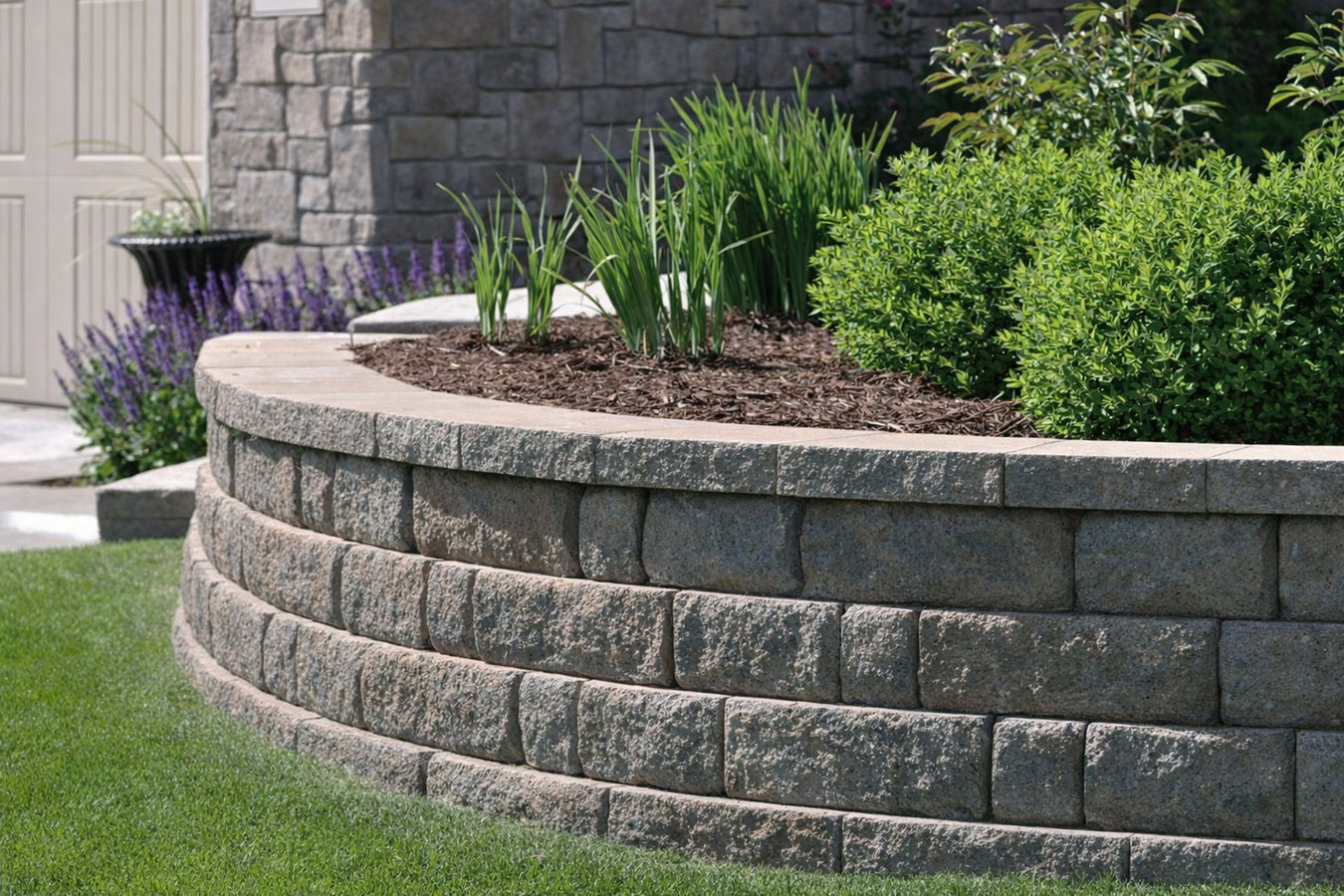
Soil washing down your hill every spring? We build retaining walls with the drainage and foundation depth that Lafayette's clay soil and hard winters demand - so your yard holds its shape for decades.
Retaining wall construction in Lafayette, IN holds back soil on a slope so it does not erode or wash toward your home or driveway, most residential projects take two to four days once materials are on site. The wall does two things: it physically holds the ground in place, and - when built correctly - it gives water a path out through drainage behind the wall rather than letting pressure build up and push the structure over.
Lafayette homeowners typically need a retaining wall when a slope is actively eroding, an existing wall has started to lean, or a hillside is making part of their yard impossible to use. The clay-heavy soil throughout Tippecanoe County makes drainage especially important here - walls built without adequate drainage behind them fail faster in this area than in sandier parts of the country. If you have an older wall that is already tilting, our masonry restoration service can assess whether it is worth repairing or needs to be rebuilt from the ground up.
If you notice dirt, mulch, or gravel collecting at the bottom of a slope after it rains, your soil is eroding. In Lafayette, spring rains and snowmelt can be heavy, and a slope without support loses a little more ground each season. Left alone, this erosion can undermine a fence, a garden bed, or a driveway edge.
If an older timber or block wall has started to tilt forward or has visible cracks running through it, the drainage behind it has likely failed or the wall was never set deep enough for Lafayette's freeze-thaw winters. A leaning wall will not fix itself - it will continue to move until it falls or is rebuilt.
If part of your yard is so steep you cannot mow it safely or let kids play there, a retaining wall can turn that unusable hillside into flat, functional space. Many Lafayette homeowners with older properties have slopes that were simply left as-is when the home was built decades ago.
If water collects against your home after a storm, a slope somewhere on your property may be directing runoff toward the house. A retaining wall combined with proper grading can redirect that water before it becomes a basement moisture problem - a real concern in Lafayette's wet springs.
We build retaining walls in concrete block, natural stone, and brick - matched to your yard, your budget, and what the slope actually requires. Every wall includes excavation to below the frost line, a compacted base, and a drainage system behind the wall. The drainage step is not optional here; Lafayette's clay soil holds water, and a wall without a proper drainage path will eventually fail regardless of what material it is built from.
For properties where the wall is part of a larger project, our concrete block walls service handles structural block applications beyond the yard, including basement perimeter walls and outbuilding foundations. We also work alongside our masonry restoration team when an existing structure near the proposed wall needs repair or stabilization before new work begins.
Best for homeowners who need a durable, long-lasting wall at a predictable cost - concrete segmental blocks are the most common choice for Lafayette residential yards.
Suits properties where appearance is a priority alongside function - natural stone walls blend into established landscaping and can last well over a century when built correctly.
Best for homes where the wall needs to match existing brick on the house or driveway - brick walls require skilled laying but deliver a clean, permanent look.
Suits properties with significant grade changes where a single tall wall would be too much to manage - terracing breaks the slope into two or three manageable levels with usable flat space between them.
Lafayette and the surrounding Tippecanoe County area sit on glacially deposited soils dense with clay. Clay holds water like a sponge - it swells when wet and shrinks when dry - which puts constant pressure on any wall holding it back. Lafayette winters regularly push the ground below freezing, and that freeze-thaw cycle pushes on the soil and the wall every year. Walls set too shallow or drained poorly will start to lean within a few years of installation. The University of Minnesota Extension notes that proper drainage and adequate foundation depth are the two most important factors in retaining wall longevity in cold climates - both of which are non-negotiable in Lafayette.
Parts of Lafayette - particularly lower-lying neighborhoods near the Wabash River and its tributaries - experience significant stormwater runoff during spring rains and snowmelt. If your yard sits in or near a drainage path, your wall needs to be designed to handle that extra water load. We work regularly in Attica and throughout Crawfordsville as well, where similar clay soil and seasonal drainage patterns shape how walls need to be built.
We come look at your slope in person - no quotes over the phone. We will walk the yard with you, discuss drainage issues you have noticed, and send a written, itemized estimate within one business day of that visit.
If your wall requires a permit from the City of Lafayette's Building Division, we handle that process from start to finish. You do not make a single call to the city. Permit timelines are factored into your project schedule upfront.
The crew excavates below the frost line, compacts the base, and sets the first course of material below ground level. This foundation phase is the most labor-intensive part and the most important for long-term stability.
As the wall goes up, gravel and perforated drain pipe go in behind it - giving water a path out rather than letting it build pressure. The wall is built level and checked at each course. A city inspector will verify the work if a permit was pulled.
Free estimate, no obligation. We reply within one business day and handle all permitting.
(765) 588-5579Every wall we build is set below the frost line for central Indiana - not to a generic standard. That depth is what keeps the wall stable through Lafayette's repeated freeze-thaw winters rather than shifting out of position within a few years.
Clay soil holds water under pressure, and that pressure is the number-one reason retaining walls fail. We size the gravel bed and perforated drain pipe behind every wall specifically for this area's soil conditions - not a one-size-fits-all system.
We pull required permits from the City of Lafayette's Building Division, coordinate the inspector's visit, and make sure the work is on record as done correctly. You are protected if you ever sell the home or file an insurance claim. See the City of Lafayette Building Division for permit requirements.
We follow best-practice guidelines from the Mason Contractors Association of America for drainage installation, material selection, and wall construction. That means the work we do is aligned with national industry standards - not just local minimum requirements.
Every retaining wall we build is designed around your specific slope, soil, and drainage pattern - not a template. We walk the site with you before a single measurement is made, and we explain what we are doing and why before the crew starts.
Repair or rebuild older masonry near your new wall before construction begins so the finished project is structurally sound from the start.
Learn MoreStructural block applications for basements, outbuildings, and property boundaries - using the same material expertise as your retaining wall.
Learn MoreSpring rains will not wait - reach out now and we will schedule a site visit before Lafayette's wet season gets ahead of you.